Recently in DIY Category

Paper Table!

user-pic
We're making every day Earth Day here at Design Squad Nation! Check out another great way to go green: paper furniture. In this video, Judy and Adam build a table out of newspapers that can hold a bunch of heavy books. How many books do you think a paper table can hold?


How would you build YOUR Paper Table? Share your ideas on the Projects page by clicking on Judy's wish below!

ds-papertable-wish.png

Rubber Band-Powered Dragster!

user-pic
The goal is simple... build a car that goes really fast and really far (at least four feet, that is). Oh, by the way, your power source is a rubber band, and your car can only have two wheels. Start your engines!


Do you have your own idea for a rubber band car design? Share it on the Projects page by clicking on Judy's wish below!

rubberband-car-wish.png

Build a Harmless Holder!

user-pic
Celebrate Earth Day every day, by building your own soda can carrier made out of materials you can find around your house! Check out the video below to see Adam and Judy invent a holder for six cans that's animal-safe, sturdy, convenient, and easy to carry.


Do you have an idea for your own Harmless Holder? Submit it to the Projects page by clicking on Adam's wish below!

harmless-holder-wish.jpg

Going green with style! These finalists in our Build Big contest took our paper table activity and made it super big AND super stylish! Kalin and Jennifer got their inspiration from this activity and our Cardboard Furniture episode. They both like art, so they thought giant paper furniture would be a great way to show their creativity!

First, the team designed their furniture, figuring out how it would look and work, and measuring out all the pieces. For materials, they used cardboard from grocery shipping boxes and duct tape, plus newspaper to make pillows! Very creative.

Click on the video to see the team's cardboard sofa, table, and sculpture.


We can't wait to sit on a cardboard sofa and watch some Design Squad Nation!

Try making your own paper furniture -- big or small! Then share it with us on the Projects page by clicking on the wish below.

Thumbnail image for ds-papertable-wish.png

You can see more of the winning contest entries on our Contest page.
Check out this video of Judy and Adam doing the Confetti Launcher challenge. The goal is simple... Invent a device that launches a spoonful of confetti into the air. The bigger the cloud, the better.


Try building your own confetti launcher and share it on the Projects page by clicking on the wish below!

confetti-wish.jpg

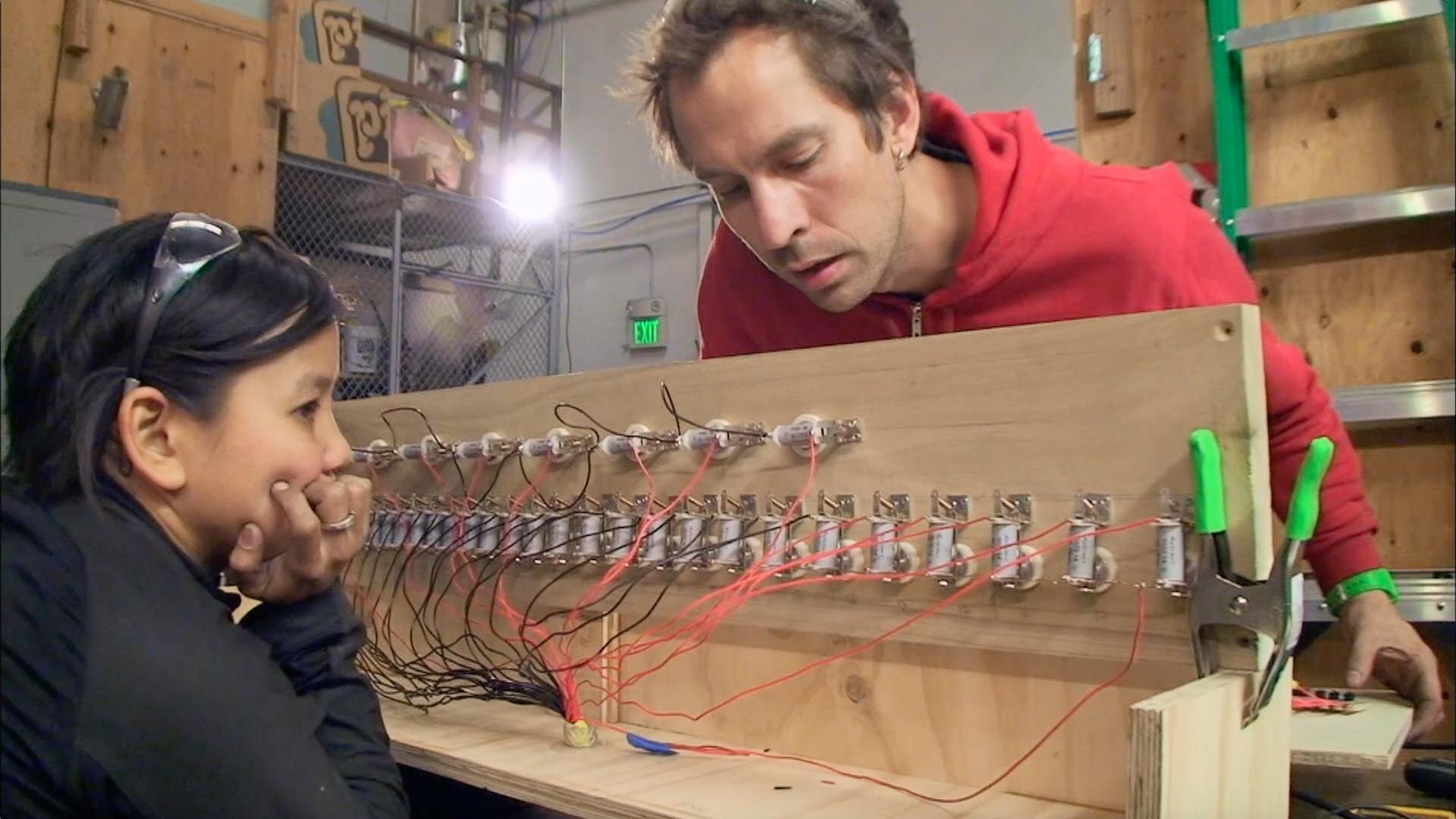
The air quality monitor we built for Sustainable South Bronx was very complex, with lots of electronic parts and computer code that controlled them. Judy and I spent HOURS testing this build! The thing that drove me crazy was the air sensor. I tried to be really careful, but during testing I accidentally hooked it up backwards and broke it! Luckily, we had a back-up sensor that worked just as well.

ds-ssbx-test.jpg

This reminded me of a lesson I learned a long time ago -- when you buy parts, especially electronic parts, always buy two! Maybe even three! If there's a part you really need, and it's really breakable, then definitely buy two. You'll thank yourself.

If you want to try working with electronics, check out this video to see me and Judy design an awesome alarm that's small enough to hide. Then try making one yourself!

ds-hidden-alarm.png


This week's Design Squad Nation episode is all about gardening. Did you know you can make your garden even greener by composting at home? It's really easy, I promise. You'll have less trash each week while making wriggly worms very happy! Just be sure to check with your parents before you get started.

Here's how worm composting works: you feed certain kinds of trash to the worms in your compost bin. The worms turn your trash into nutrient-rich "castings" that you can use to fertilize your garden!

In this video, I'll give you a tour of the compost bin in my garden, and show you how to make one of your own!


After a month you should start to see a mix of food, newspapers, compost, and even baby worms in your compost bin! These guys are fun to see. Once the worm family grows larger, share some of the worms with your friends and show them how to start their own worm compost bin, too!

Cardboard IKEA challenge

user-pic
Speaking of paper tables, have you seen our cardboard IKEA challenge? The teams compete to build the most original and function pieces of furniture for judging on an IKEA showroom floor -- the only catch is that it all has to be made out of cardboard!  Check it...

cardboard-ikea.jpg

Then submit your own idea for paper furniture by clicking on the wish below!

ds-papertable-wish.png

Giant Pop Fly!

user-pic
This giant Pop Fly catapult will be launching live at Design Squad Nation events in 2011! Based on our table-top activity for kids, this prototype stands six feet tall and can fling things farther than any other Pop Fly built to date. Want to build your own? Take on the challenge at on the Pop Fly Projects Page!

Testing new Moon Rovers!

user-pic
moon-rover.png
When NASA astronauts travelled to the moon they used moon cars--called rovers--to drive across the moon's surface to explore the area, carry supplies, and to help build their outpost. Check out this video of a NASA moon rover test-driving across some rocky terrain in Arizona. It is crucial that the moon rover be able to drive in rough conditions, so prototyping and testing the rover is very important before the day of launch. When you are done watching the video, head on over to the Moon Rover Projects page to see Adam and Judy build their own moon buggy, then build and submit photos of your own!

Things to look out for in this video:

- See how NASA uses the Arizona desert to test their new prototype. Testing the new rover in an environment that is close to the Moon's is important to understanding if the rover will work once the mission in underway.

- Look at the way the NASA engineers designed the wheels so that they can adapt to the rough terrain of the moon. Each wheel can turn and lift independently, allowing the rover to negotiate any bumps or holes.

- Try to compare the first model of the Moon Rover to the new design. What is different? What is the same? What does the new design allow the astronauts to do that they couldn't do before? 

Okay, let's watch!